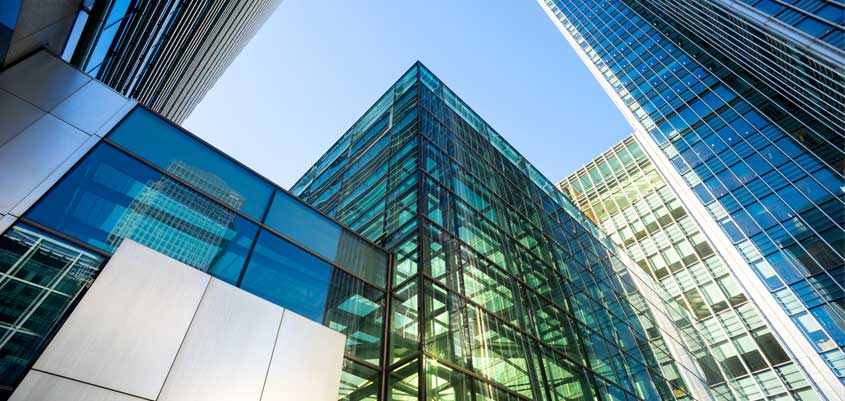
The role of the smart building in the protection of our environment
The increasingly restrictive regulations related to environmental protection and energy efficiency lead the construction sector to consider a model change. Thus, the most advanced architectural projects focus on the construction of smart buildings capable of, among other achievements, minimizing energy expenditure. But what is a smart building?
What is a smart building?
A smart building is one that uses the latest technologies to improve, on one hand, its use and control by users, and, on the other, its energy efficiency. One of the characteristics is the use of home automation, that is, a set of mechanisms whose purpose is to automate buildings. Thus, through an integrated telecommunication system, lighting, blinds, appliances, or the mechanical ventilation system, among others, can be programmed, whether from inside or outside. Thanks to this controlled use and efficient management of resources, not only is maximum comfort and well-being achieved, but energy expenditure associated with building use can also be minimized.
Regarding mechanical ventilation installations, when we talk about intelligent control we refer to the implementation of devices capable of adapting the ventilation flow necessary to achieve quality indoor air to conditions of humidity, CO2, etc.
Nearly zero energy consumption buildings: the paradigm of the smart building
A nearly zero energy consumption building is one that minimizes energy demand to the maximum. During its design, construction, and use, renewable energy sources are employed —to minimize the ecological footprint, that is, CO2 emissions— and energy storage systems. It is worth remembering that as important as energy generation, or even more so, is energy conservation. It aims to make the building act like a thermos: preventing energy dissipation to the outside through its enclosures.
The nZEB (for its initials in English), are highly efficient buildings capable of functioning in a nearly autonomous way. The high pollution of the atmosphere, a cause of global warming of the planet, has prompted authorities to take action. Thus, the European Union promotes the construction of this type of building. Not in vain, all new public buildings must be nZEB as of 2018. In the case of new private buildings, the date has been set for 2020.
Sustainable architecture: an urgent matter
The construction of efficient buildings is more than a necessity:
- It protects the environment, thanks to the reduction of CO2 emissions, the use of renewable energies (solar, wind, hydraulic, geothermal...) and the reduction of waste generated.
- It protects the health of individuals. Thanks to the quality of indoor air in its spaces, we can affirm that a smart building is synonymous with health, comfort, and well-being.
- In the long term, they represent an economic savings. Although it is true that initially the investment may be somewhat higher, the practical suppression of conventional heating and cooling systems, the implementation of controls in all installation systems (lighting, fire protection...) and the use of consumption control devices lead to a reduction in energy consumption, and consequently, the economic bill.

Siber Ventilation