Geothermal energy and ventilation, can they be combined?
The geothermal energy is a type of sustainable energy solution that in Spain is not as popular as in other places, because it is considered optimal mainly in extreme cold climates. But even though Spain is a warm country compared to the rest of Europe, there are many areas where temperatures can reach very low levels, especially in mountainous areas. It is in those cases when the combination of geothermal energy and ventilation can help offer an ecological and very low consumption alternative.
First of all, what is geothermal energy? It is a high energy efficiency air conditioning option that can be considered completely ecological and renewable. It manages to collect heat from the underground, which is undoubtedly a gigantic energy source. One must take into account that a few meters below the ground, the energy of the sun is stored, and at the core of the earth, it is easy to find temperatures of 6,500 degrees.
The idea of geothermal energy is to harness this high-temperature energy with heat pumps. With them, it is possible to provide heating and hot water, but it can also be transformed into power to run an air conditioning unit in summer.
What is the main problem with geothermal energy? Mainly, its initial investment. It is necessary to excavate the ground, and to achieve greater efficiency, it is important to try to go deeper. This generates significant expenses that will take years to amortize through savings on utilities during that entire period. However, it has something very positive: its maintenance is minimal, and once the underground work is done, it does not require renovations.
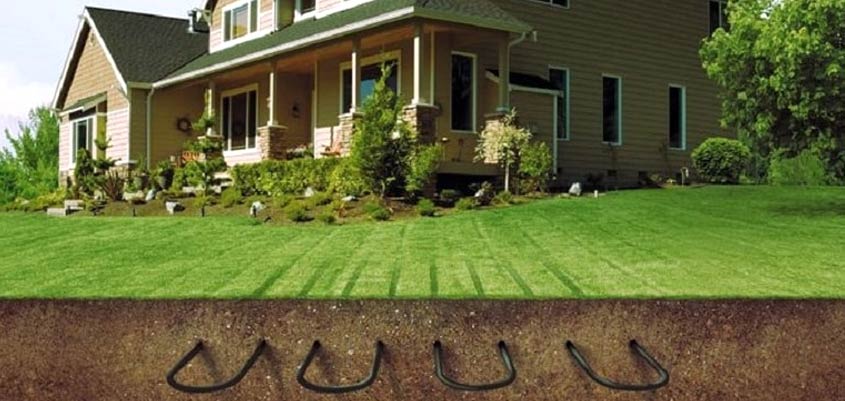
There are, however, ways to lower its installation cost. In its use, we can pump heat from the ground to a not very deep level. For this, the heat exchanger can be buried underground at a short distance, and from there, the collected heat will be pumped. Its operation is similar, for example, to that of air conditioning systems, as it acts like a cooling unit. Therefore, in summer we can use geothermal energy to extract heat from the ground that will be cooled, while in winter it will emit it as heating.
Some of its advantages are:
- In any type of structure, great performance from the heat pump can be achieved. No specific ground is needed, so it can be installed in almost any location and obtain optimal results.
- It is estimated that at approximately five meters deep, the ground has stable temperatures around 19°C throughout the year. A temperature that will cool in summer and be used for heating in winter.
- Geothermal energy can be efficient during times of high demand, such as when a home is below 10°C in winter or above 35°C in summer, while other solutions like aerothermal energy would not achieve that efficiency.
- Also, compared to aerothermal energy, it is easier to exchange heat because it works with the temperatures of the underground.
How to combine geothermal energy and ventilation?
Both mechanisms -both aerothermal and geothermal- can be connected to a dual flow ventilation system, achieving maximum efficiency, as the heat pumps of geothermal energy will work along with the air supply system in the necessary renewal of the air.In this way, the dual flow ventilation system will expel the air that has lost quality indoors, as well as humidity or cooking fumes, always through a duct network. Through another network, air that will first pass through the geothermal heat pump, being cooled or heated according to the needs of each moment will be supplied.
This conditioned air -which will also pass through a filter to clean it of impurities and contaminants before being received in the home spaces- will be able to provide the greatest comfort indoors. The use of geothermal energy combined with ventilation systems can offer better results because it is a sustainable energy source.
As mentioned earlier, the main problem of geothermal energy is the price of the initial installation. However, it will be amortized in the coming years and can work alongside the mechanical ventilation system to avoid the use of traditional air conditioning options like air conditioning or heating, which have much higher energy consumption.

Siber Ventilation
Related posts