Future of Ventilation: Industry Challenges in the Medium Term
It may seem that the history of ventilation is relatively recent due to the prominent importance of technology in the sector. Indeed, air conditioning units may be a little over a hundred years old, but their usage became widespread not too long ago. However, ventilation does not only require electrical devices, but the way houses and buildings are constructed to allow air circulation is also part of it. What will the future of ventilation be then? Do we have a long way to go or are we facing a stagnation of the sector?
In response to that question, the answer is clear. We are at a moment of change and perhaps at a point where, at least in Europe, almost everything is going to change. And not only in the world of ventilation, but in everything related to climate control and energy use. The reasons lie in generational changes and, above all, in the new regulation of the sector.
The popularization of air conditioning systems and heating equipment in Spain occurred less than 30 years ago. Until then, they were not common in almost every household, partly due to their price. Today, this is a sector that is increasingly stagnant, despite notable technological advancements. There are silent air conditioning units that are much more efficient and heating systems that consume less. Nevertheless, there is a factor they cannot avoid, high energy consumption.
It tends to be believed that many economic sectors are linked to a specific generation. The Baby Boom generation and the next one, known as Generation X -from the 1960s to the 80s-, wanted to live in a house with climate control and were the ones who started to have air conditioning and heating.
Looking to the future, the generation known as millennials -born from the 80s onwards- will spearhead many changes in economic sectors, and also in the future of ventilation. Experts considered this at Eureka last December, one of the most important conferences in the sector in Europe. There, experts commented that young people will not be more concerned about heating or air conditioning, but simply about comfort and well-being, regardless of the device itself.
Mechanical ventilation systems precisely offer that, a solution capable of providing the necessary comfort without requiring our concern. They operate automatically at all times and monitor to maintain the ideal temperature and eliminate stale air.
"From the industry, we must better understand what we all need to continue innovating and achieving even higher levels of comfort and sustainability. A key element is to explore how our sector can contribute sustainability and comfort in the long run, respond to the demands of future consumers, and create appropriate solutions for the future," explained the president of the European Ventilation Association, Joan Miró Ramos.
The key to the future of ventilation, according to the industry, will be energy efficiency, comfort at home, and health improvement.
Double flow systems in the future of ventilation
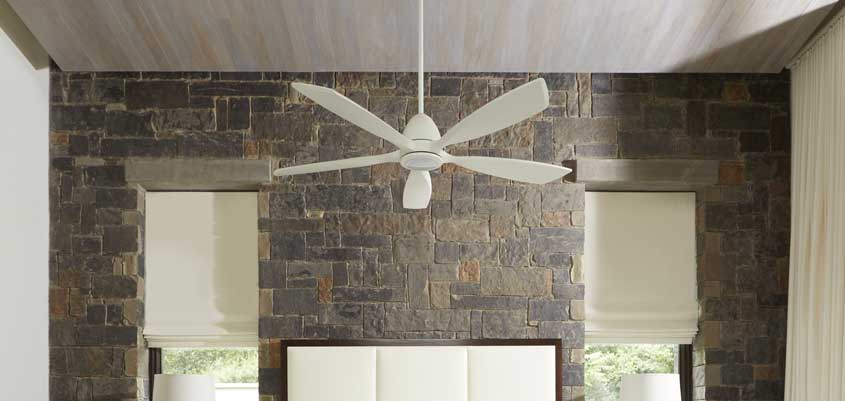
The immediate future of ventilation lies in nearly zero-energy buildings. All buildings constructed starting in 2020 will have to meet these standards, although public buildings must already follow these guidelines. In these cases, it is necessary to have a mechanical ventilation system to ensure a constant flow of clean, fresh air.
New buildings are much tighter and are designed to prevent cold and heat from seeping in. Therefore, it is necessary to have a mechanical ventilation system that creates an air flow within the homes.
This way, there is no need to use air conditioning or heating equipment in the vast majority of situations. And this directly influences the sector's need to bet on energy efficiency.
On the other hand, the other important aspect of the ventilation systems of the future is health. The mechanical ventilation systems that introduce air do so by filtering it first, which represents a significant advancement for the health improvement of people residing in those spaces.
Similarly, by extracting stale air from homes, respiratory problems are prevented and humidity is controlled. It is important to note that the Technical Building Code, in its basic document HS3, specifies that buildings must have systems that guarantee air safety.
For all these reasons, the most immediate future of ventilation inevitably focuses on improving the air breathed indoors and energy efficiency. Which, right now, brings us closer to mechanical ventilation systems.

Siber Ventilation
Related posts

Constant flow ventilation systems, how do they work?

Discover which ventilation network best suits your project
Discover which ventilation network best suits your project Ventilation projects increasingly combine sustainability, comfort, health, and energy efficiency considerations. There is a clear objective to optimize resources. The aim is to advance along the lines of the Sustainable Development Goals (SDG 2030) and the philosophy passivhaus. Ventilation companies present projects compatible with energy efficiency and reduction of electricity consumption. This is contributed to by the overall context of crisis, with the resulting uncertainty arising from the invasion of Ukraine. Thus, for example, the government's energy security plan of Spain is a response to that reality.