Use of a geothermal plant to optimize energy

superadmin
January 6, 2017
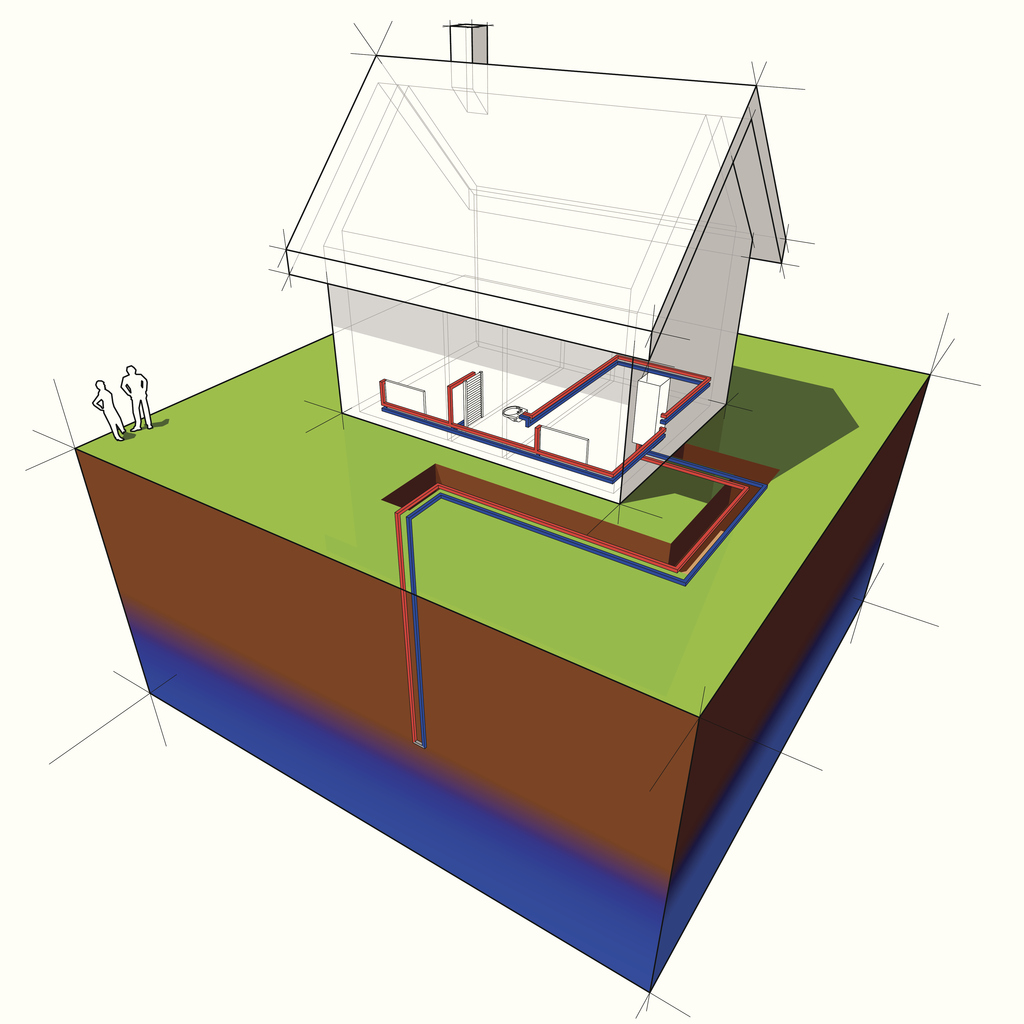
Do you know the basic principles of a geothermal plant? We explain the strengths of an energy system that promotes sustainable development, its applications, and its implementation in existing buildings.
What is a geothermal plant and what does geothermal energy consist of?
Given the current price of fossil fuels and the environmental consequences of their consumption, all governments are directing their efforts towards promoting alternative and clean energies, such as geothermal energy. Although its use dates back to ancient times (Roman baths, Turkish baths, spa treatments, etc.), this energy, endowed with great potential, is not entirely known. Unlike most renewable energy sources, geothermal energy does not originate from solar radiation but from the temperature difference between the Earth's interior and its surface. Currently, geothermal energy can be applied to generate thermal energy and electrical energy.
On a planetary scale, it is the largest energy resource. Although the interior temperature of the Earth is lower than that of the surface, as it emits more heat than it produces, the rate of that cooling is about 130 °C every billion years. Due to the slowness of the thermal diffusion mechanism, the Earth is currently losing the heat it generated in the past at its surface. On a human scale, the heat of the Earth is unlimited. The same cannot be said for fossil energies, which deplete as they are exploited. Thus, it is estimated that future generations will have access to geothermal energy, as long as the exploitation of geothermal resources is done rationally.
A clean energy
No installation that uses geothermal energy needs to burn fuels, therefore, it does not contribute to greenhouse gas emissions. Installations that use geothermal heat pumps for heating, cooling, and the production of domestic hot water only consume electrical energy for the operation of electric compressors, circulation pumps, and indoor fans. The equivalent gas emissions are only those corresponding to the original production of that energy, which are much lower than those of traditional systems, as electricity consumption is significantly reduced.
A continuous energy
Unlike solar or wind energy, geothermal energy does not depend on the climate (sunlight or wind): it is available 24 hours a day, 365 days a year. It is an energy that depends on the intrinsic characteristics of the subsoil (geothermal gradient, rock permeability, etc.). Since these characteristics remain constant for each specific case, regularity in its use is guaranteed. The availability coefficients of an electric geothermal plant is on average 90%. For heating networks, it can reach 100%.
How to take advantage of geothermal energy in your ventilation system?
There are high-performance controlled double-flow mechanical ventilation systems on the market with geothermal air-ground exchangers for homes. The geothermal air-ground exchanger uses the inertia of the earth to cool fresh air in summer and heat it in winter. It consists of a fresh air intake, special ducts, and an inspection point, as well as a grid and a G4 filter that ensure healthy air.


Siber Ventilation
Related posts