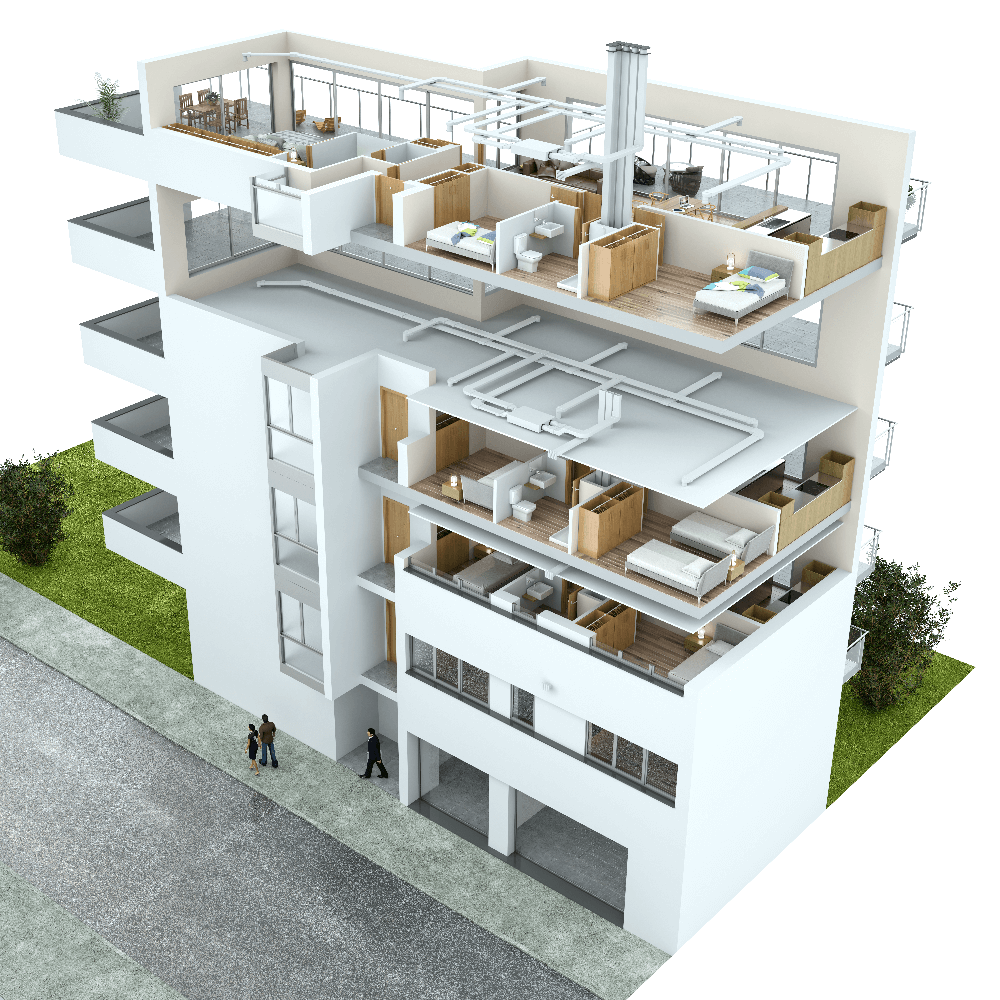
Definition, types, and phases of controlled mechanical ventilation
Controlled mechanical ventilation (CMV) is a concept that has gained significant importance in the construction and rehabilitation of homes and buildings over time. What are the reasons? It increases the thermal comfort of spaces, improves indoor air quality, and enhances the energy efficiency of properties. For all these reasons, we at Siber want to explain what it is in great detail.
What is mechanical ventilation and what types exist?
Mechanical ventilation is a system for renewing the air inside homes and buildings. Specifically, it consists of a series of devices and ducts with enough force to extract the air and send it outdoors, as well as to introduce fresh air indoors.
However, not all CMV systems are the same. We can differentiate between two different types.
Simple flow mechanical ventilation
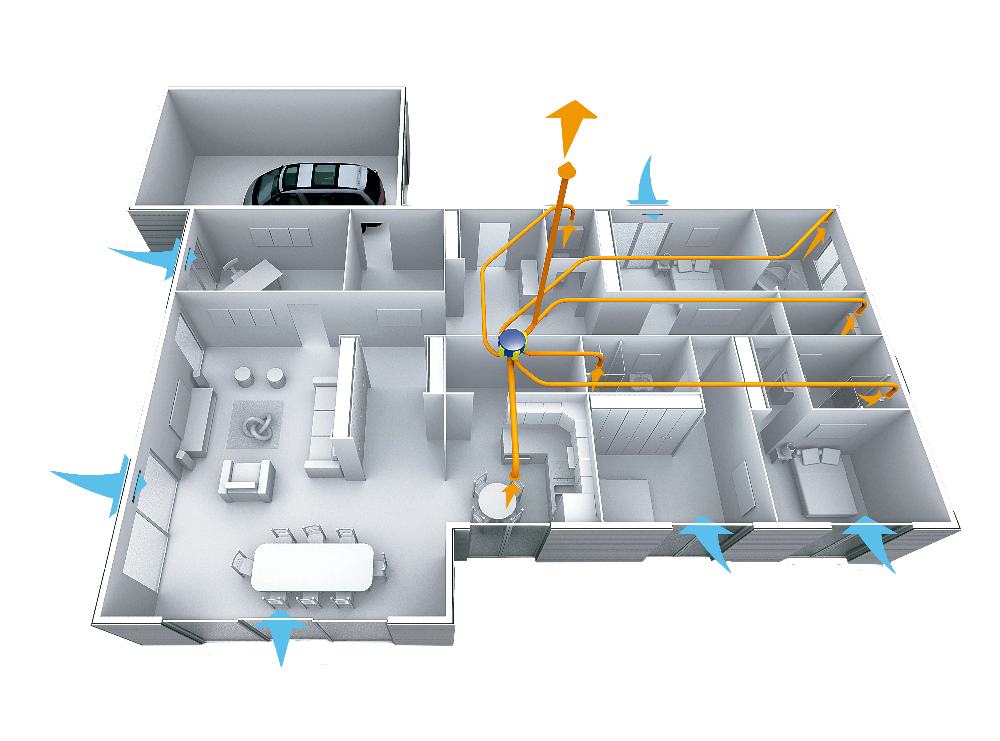
In this case, the systems, once extraction occurs, introduce fresh air directly. This results in an almost instantaneous temperature imbalance. It is undoubtedly the least efficient type and is used less and less.
Double flow mechanical ventilation
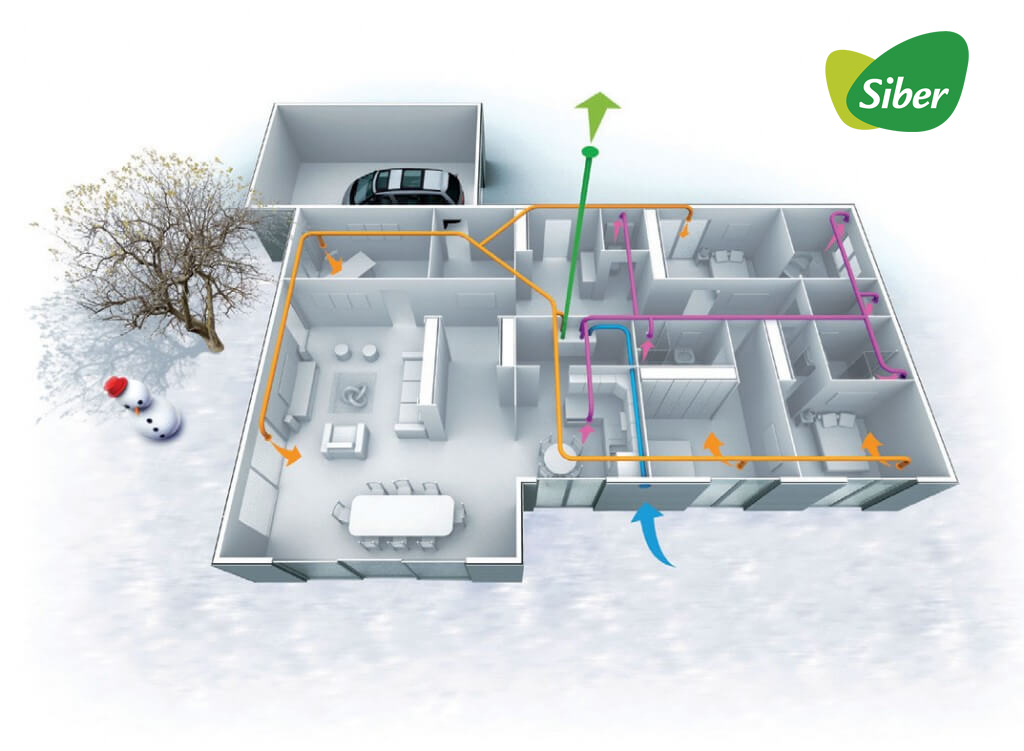
These systems are the most complex, but they are also the most cost-effective in terms of energy efficiency. Therefore, they are recommended by the Regulations for Installations in Buildings (RITE).
The reason is simple: they have heat recoverers. These components allow them to recover a part of the energy from the extracted air, which is used to introduce fresh air at a temperature similar to that inside. This results in significant electricity savings both in summer and winter.
What are the phases of ventilation?
The operation of controlled mechanical ventilation systems follows a series of phases:
- Extraction of air from inside the room. For this, they use an extractor and a series of ducts that lead, generally, to the building's roof.
- Introduction of air. A pump captures air from outside and brings it into the home. This occurs simultaneously with extraction.
- Heat recovery. In equipment equipped with this component, energy transfer occurs between the extracted air and the introduced air, ensuring temperature stability.
When is mechanical ventilation required?
Having a mechanical ventilation system is a good idea in almost all cases. This is primarily because we spend, on average, 90% of our time indoors. Over time, due to the expulsion of carbon dioxide while breathing and many other agents (smoke from cooking, dust, and mites accumulation, bacteria and mold proliferation, etc.), the air becomes stale.
Removing this stale air is crucial for maintaining health. However, natural ventilation, that is, opening windows, is not a good idea in terms of energy efficiency. When we do this, the air we have previously cooled or heated with HVAC systems is lost, necessitating starting over.
Additionally, there are energy efficiency regulations that encourage the installation of such systems. The most important of all is the RITE, to which we previously referred and which is mandatory.
In short, controlled mechanical ventilation plays a vital role in modern construction. Thanks to it, we can significantly reduce the demand for air conditioning and heating, thus protecting the planet and conserving available resources. Moreover, we will also enjoy healthier air to breathe. We encourage reading this article on the 5 most valuable resources for the energy efficiency of our home.


Siber Ventilation