
Sustainable Construction in Nearly Zero Energy Buildings
The Nearly Zero Energy Building is just around the corner. Starting in 2020, all constructions that are carried out in our country will have to meet requirements that will make all homes and workplaces consume very little energy, and at times none. However, many builders still do not know how to carry out this new reality in the industry. A good option for this is to use sustainable construction in Nearly Zero Energy Buildings.
First of all, we must mention that every Nearly Zero Energy Building does not have to be constructed under ecological rules that focus primarily on respect for the environment. But every sustainable construction will comply with the standards of Nearly Zero Energy Buildings.
That is why this type of environmentally friendly construction can be a roadmap to adapt, in many cases, to the new Nearly Zero Energy regulation. What is sustainable construction based on then? The main definition is that it involves building based on respect for the environment and nature.
The concept of sustainability in construction does not only lie in respect for ecology, but goes further:r t
rThe sustainable construction goes beyond the requirements of the Nearly Zero Energy Building, which focuses on energy efficiency. And in light of the problems faced by the architecture sector regarding the new regulation, opting for sustainable construction is a way to adapt to the new regulatory framework and also add added value by respecting sustainability.
The Nearly Zero Energy Building is based on the following requirements:r t
rAll these requirements are present in sustainable construction, but ecology applied to construction goes much further.
How is sustainable construction achieved in Nearly Zero Energy Buildings?
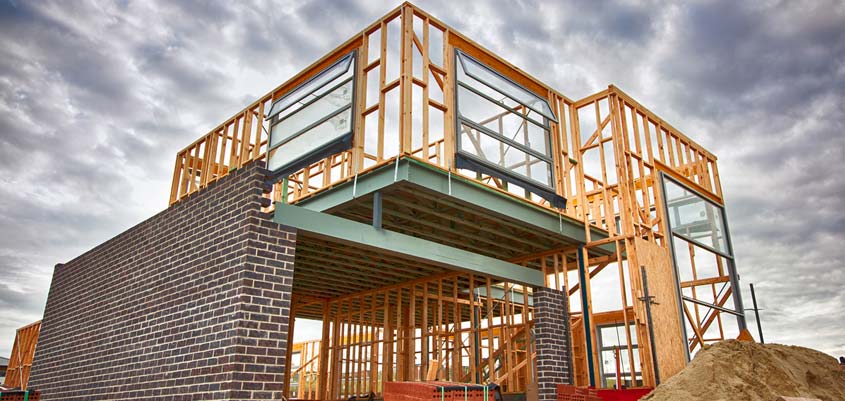
Sustainable construction means energy efficiency just like in Nearly Zero Energy Buildings, but prioritizes the preservation of ecology and sustainable development. It does not only stay in the building’s consumption but promotes that materials have been extracted in an ecological manner and the environmental-friendly construction. Some of its characteristics are:
- r t
- Use of recycled materials. Giving new life to already used materials for the benefit of the planet. Tiles made from bottles, carpets from tires, or floors made from recovered wood. r t
- Great use of natural light. In this point, it coincides with the Nearly Zero Energy Building. A proper orientation and large insulated windows are chosen. r t
- Low carbon content materials. To avoid polluting emissions, less harmful materials should be chosen. r t
- Proximity in the extraction of materials. Sustainable construction bets on proximity, thus reducing pollution in the transportation of materials by road. r t
- Use of renewable energies. Such as solar energy or even harnessing the wind. Both resources are available in large quantities and can help reduce pollution. Similarly, it enhances consumption as well as preservation of the planet. r t
- Efficiency in water installation. Dual-flush cisterns and toilets. Also, it is possible to opt for rainwater collection systems. r

Siber Ventilation
Related posts

Constant flow ventilation systems, how do they work?