Ventilation conditions in parking buildings for vehicles

superadmin
March 25, 2017
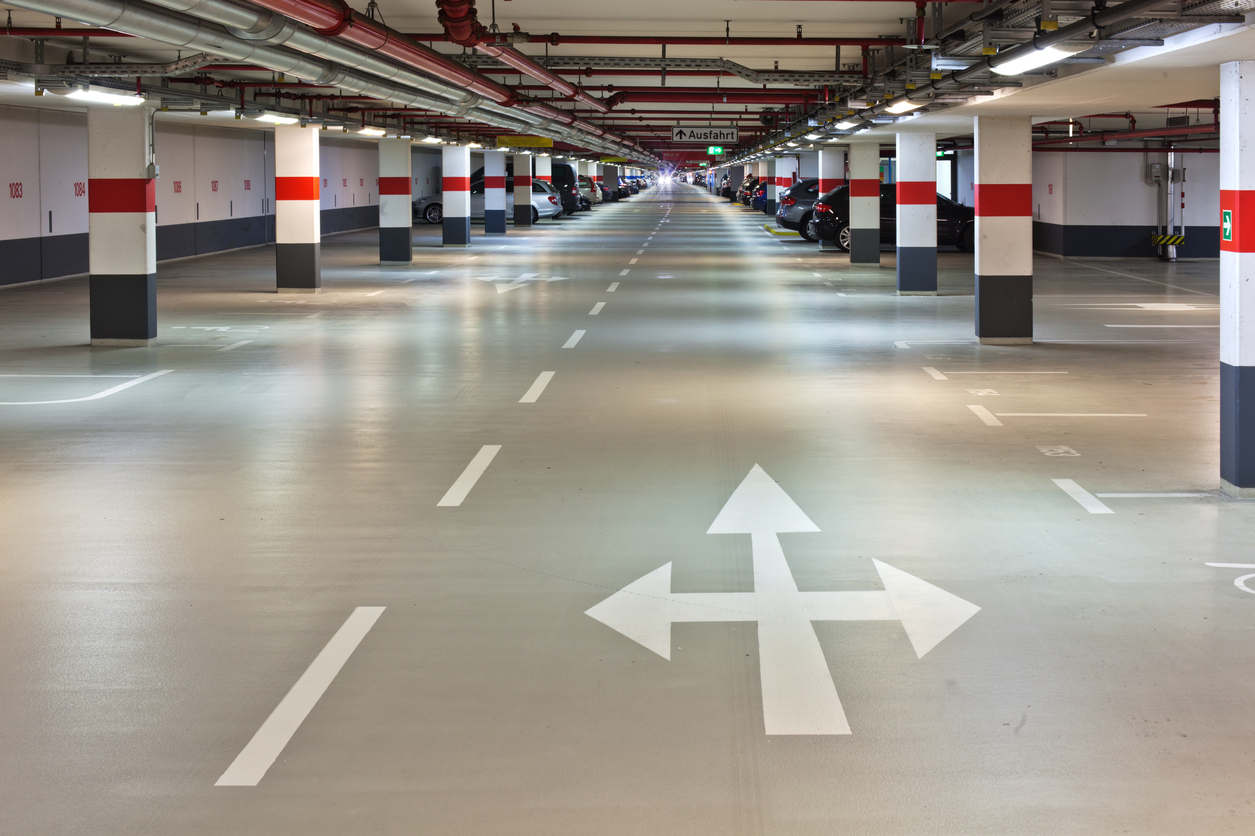
The ventilation in a vehicle parking area aims, first of all, to ensure that no carbon monoxide (or CO) accumulates in dangerous concentrations at any point in the parking area. As indicated in C.T.E DB-HS 3, in its section 3.1.4. "Parking lots and garages of any type of building", the ventilation system used in these buildings may be mechanical or natural in the case of a surface or elevated parking area with facades that are directly accessible from the outside.
Requirements of the C.T.E. for the ventilation of vehicle parking areas
In the case of natural ventilation, it is required that this be cross ventilation with openings on two opposite facades of the building to ensure that the renewal of contaminated air completely encompasses all the volume of air contained inside. From any point in the parking area to the nearest opening, there should not be a distance greater than 30 m. When placing the ventilation openings, whether natural or mechanical, it must be taken into account that the relative density of CO with respect to air is 0.97. This means that it is a lighter gas that will accumulate in the upper parts of the parking area. It is in those areas where the extraction vents should be placed.If a mechanical extraction system is used, ventilation must be done by depression, using one of the following options:
- Mechanical extraction system accompanied by the admission of air by natural means.
- Mechanical admission and extraction system.
- There must be one admission opening and one extraction opening for every 100 m2 of usable area.
- The separation between the nearest extraction openings must be less than 10 m.
Characteristics of pollutants
CO or carbon monoxide, is the most dangerous gas emitted by a vehicle and the one that requires more dilution so that it is not harmful to the building users. CO is an imperceptible gas, without odor and without taste, whose effect on people inhaled in significant amounts is the progressive reduction of the ability to transport oxygen by the blood, potentially leading to death in extreme cases. However, the effects of poisoning are completely reversible and without sequelae, and brief exposure to high concentrations of CO poses no risk and can be tolerated. It is accepted that for stays of less than one hour, the CO concentration may reach 125 ppm (143 mg/m3), while for a stay equivalent to an eight-hour workday, the maximum admissible level is 50 ppm (57 mg/m3).Smoke evacuation in case of fire
The smoke extraction in the event of a fire involving any of the vehicles inside a parking area must prevent users inside from breathing the toxic smoke generated. Due to their temperature, the smoke accumulates in the upper part of the enclosure and should be able to be evacuated in sufficiently large quantities so as not to hinder the work of firefighting services. As a general rule, it is considered that the ventilation system must guarantee a minimum renewal of 15 m3/h per square meter of surface. When the parking area is public and greater than 1,000 m2, there must be an auxiliary supply for the fans and it will be mandatory to have CO detectors for the automatic activation of the ventilation system.
Siber Ventilation
Manufacturer of High Energy Efficiency Ventilation Systems. Siber provides a set of high energy efficiency solutions in wind and mechanically intelligent ventilation, improving the Health, Hygiene, and Comfort of people, being respectful of the environment.