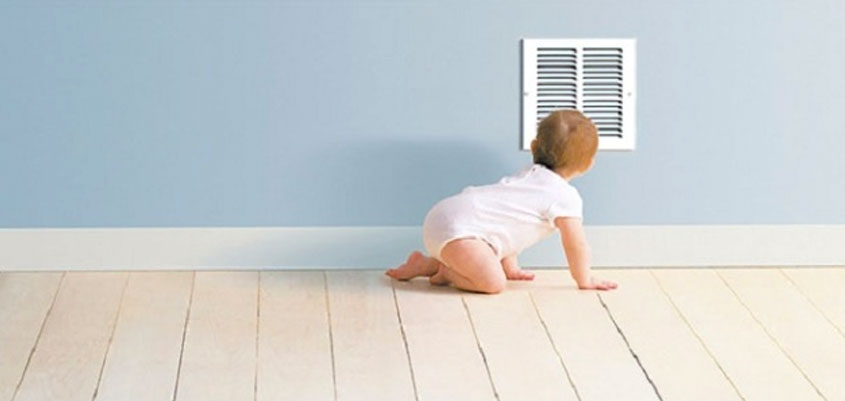
How clean new air is incorporated into ventilation systems

superadmin
March 18, 2017
The complexity of natural ventilation systems lies in the diversity of factors that cause air movement within a building, both in terms of wind (speed, direction, topography, and surrounding buildings) and external and internal temperatures of the building. These factors influence ventilation in different ways: air stratification, overheating of the roof, introduction of clean air, etc. Therefore, to correctly design a natural ventilation system, it is necessary to validate it beforehand using numerical simulation techniques (CFD) and establish an initial strategy that takes into account the following factors:
- Climate analysis: in areas with very warm climates and large temperature variations between day and night, it is appropriate to promote night ventilation that can be closed during the day to avoid warm outside air. In humid and hot climates, natural ventilation throughout the day is very suitable, encouraging an open building scheme with patios and crawlers that allow the entry of clean new air. In these cases, air movement inside contributes to increasing the comfort index of the occupants. Finally, the installation of a mechanical ventilation system should be considered when natural ventilation is inadvisable, as can happen in areas with very cold climates.
- Building orientation: it is necessary to maximize the ventilation with clean new air that can be introduced into the building from facades perpendicular to summer winds, avoiding introducing obstacles (trees, adjacent buildings, etc.) in that direction. Conversely, to avoid winter winds, vegetative barriers or rows of trees can be placed to intercept their predominant direction.
- Project design criteria: to introduce an efficient natural ventilation, the projected building must be narrow, so that the main facades are close together, allowing for easy cross ventilation. The maximum width of the building in these cases is 13 m.; beyond this length, the installation of a mechanical ventilation system should be considered. In spaces with high ceilings such as industrial warehouses, interior patios, etc., the installation of skylights with ventilation grids is very appropriate, favoring the exit of air through temperature gradients between the interior and exterior of the building.


Siber Ventilation
Manufacturer of High Energy Efficiency Ventilation Systems. Siber provides a set of high energy efficiency solutions in wind and mechanically intelligent ventilation, improving the Health, Hygiene, and Comfort of people, being respectful of the environment.