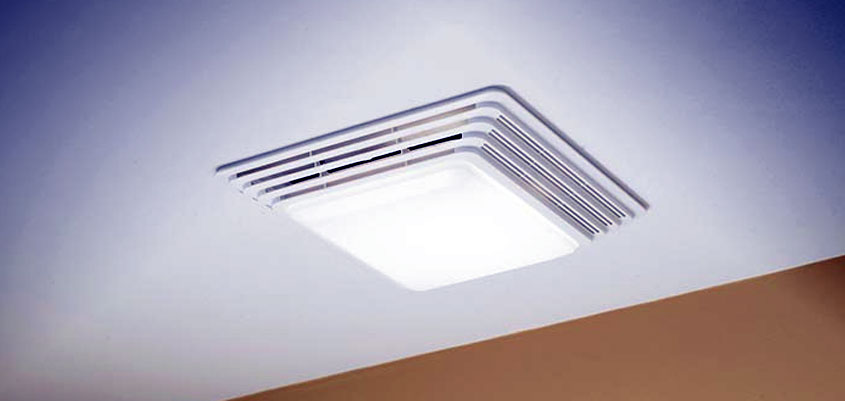
How to Lower Radon Gas Levels at Home
The radon gas is a poison that affects the health of people and also our buildings. As we have explained previously, radon is a very harmful and damaging poison for humans, and it is considered the second leading cause of lung cancer mortality. Lowering the level of radon gas in our homes, if we are in a risk area, is essential.
So much so that the European Union has taken action. Starting this year 2018, which has only recently begun, the radon gas must be eliminated from homes and workplaces. The community body now forces Spain to combat the proliferation of this natural gas that originates from the soil and emits radioactive particles that are inhaled by the lungs.
The radon gas has no taste, no smell. It also has no color and is not visible. But it settles in the cells that line the respiratory pathways and can damage DNA, leading to lung cancer in too many cases.
That is why the European Union has urged the Spanish government to take action against radon. How? Starting this year, the community body requires periodic measurements of this gas. The regulation approved by the EU establishes protective measures to prevent the gas from entering homes. In places where 300 becquerels per cubic meter are reached - the unit in which radon is measured - reform measures must be taken.
It is also now required to build according to specifications that achieve sufficient protection in the rooms. Especially in areas of the country with higher radon gas exposure.
To protect against radon gas, the World Health Organization offers some main options, which we already discussed previously:
- Improve ventilation. Especially in the basement area, where the gas usually originates.
- Use mechanical extraction systems in the basement to extract radon in areas of high concentration.
- Seal leaks. Any small crack can be lethal for gas entry.
- Perform a thorough sealant of the walls.
What to do to lower radon gas levels?
Protecting ourselves against this poison and lowering radon gas levels in our buildings can be simple to do if we know how.
Of course, improving ventilation is the most effective method. But not the only way. We have previously mentioned that sealing every crack is important, but to ensure we can take a step forward. All joints, especially in underground buildings, need to be sealed. Basements, garages, and storage rooms must be waterproof and should not allow any leakage.
If there is already an issue with this contaminant, to lower radon gas levels, a fan and a piping system can be installed to extract radon from the ground.
Temporarily, we can open the windows and vents to breathe outside air. The air outdoors normally has a very low radon content. It is the air from the basement and indoors that tends to be affected. We need to create a draft by opening windows on both sides of the home, not just one window. And it is even possible to use fans for greater air extraction.
At the same time, we can close the entrances and pathways from the basements and underground to the upper floors. These measures, while temporary, can achieve lowering radon gas levels in our homes.
Unfortunately, these measures are temporary. To eliminate the gas from our homes, it will be necessary to seal all cracks and openings. It is possible to use waterproof resin for this.
All this until the level of radon gas is very high. In those cases, a system to suction from the underground will be necessary. Because ventilation systems protect us in the home against this poison, but we also need to get rid of the gas that is stored in the underground. Mechanical extraction can be done by installing a tube and an extractor.
After eliminating radon gas from a home, it is essential to conduct a measurement test to know how much gas remains in the environment. In any case, it must have been achieved to lower radon gas levels. But if that is not the case, what remains is to redesign the home with professionals who can advise us. But certainly, what we cannot do is coexist with radon gas, a poison that can be the worst we have at home. At least among those that are not visible nor can we detect their presence.

Siber Ventilation
Related posts

Why is mechanical ventilation necessary in homes?