
How is a radon gas mitigation project carried out?
Radon gas mitigation inside homes is crucial for purifying the indoor air and preserving the health of its occupants. This is fundamentally due to the fact that it is a radioactive gas derived from the natural decomposition process of uranium. It is colorless and odorless, which means its detection can only be done using special devices. Here we want to tell you how we can reduce it from the environment.
How is radon gas mitigation done?
As we mentioned earlier, detecting radon gas in the environment is not easy, as it has no smell or color. However, modern sensors provide this possibility. It is considered that when the indoor air of a house exceeds 300 becquerels per cubic meter (Bq/m³), it is necessary to take the following mitigation measures.- Seal cracks. Or any other porosity or leakage that is occurring. For this, it is necessary to carry out thorough sealing of the floor and walls, especially in the underground areas of the home with radon or the building.
- Install mechanical air extraction systems. Mainly in the basement, as it is the place where radon enters and tends to have the highest concentration. If possible, natural ventilation of the space should also be improved.
Example of a residential project
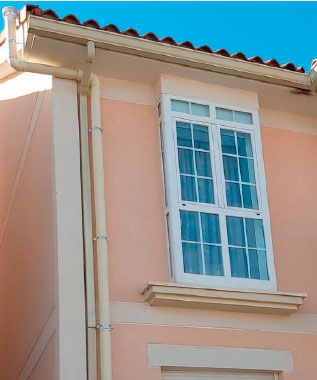
Let’s take as an example the project we carried out on a house with radon. Specifically, before carrying out the work, the levels recorded in the living room were 350 Bq/m³. In some areas, they exceeded 1000 Bq/m³. The source of the intrusion was the sanitary slab, so we had to install an active depressurization system over it.
The protagonist of this active depressurization system of the sanitary slab was a forced air extraction unit that operated from the slab to the roof. Thanks to it, those levels were reduced to 37 Bq/m³. A much lower figure than the maximum recommended by the World Health Organization, which is 100 Bq/m³.
The danger of radon gas
According to the American Cancer Society and many other organizations, radon is a potentially carcinogenic and lethal gas. In fact, it is considered the second leading cause of lung cancer in the world, only surpassed by smoking. This is because it settles in the cells that make up the tissues of the respiratory tracts and damages the structures of the DNA molecules.To get an idea about the danger of radon inside homes, we can add another fact: for every 100 Bq/m³ increase in its concentration in the air, the risk of developing lung cancer rises by 16%. Moreover, this percentage multiplies by 25 if the affected individual is a smoker.
In short, these are the main negative effects of radon on health. Undoubtedly, the only way to prevent them is to take ventilation-related measures that manage to reduce the concentration levels of this radioactive gas in the environment. The radon mitigation actions we have outlined here are completely effective, although it is true that we can carry out many others. Each case is different, but the goal is always to preserve the health of the home occupants.

Siber Ventilation
Related posts
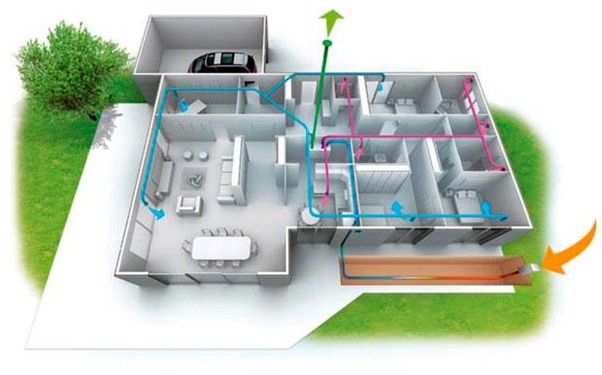
Comfort and well-being for homes, Controlled Mechanical Ventilation (VMC)
The quality of indoor air and its multiple effects on health