How to calculate the energy rating scale and its optimization
The Energy Efficiency Certificate is an official document that is mandatory for all properties that are to be sold or rented. Although interpreting the scale values is not difficult, as it is a value from A to G and has a series of colors from green to red for better understanding, how to calculate the energy rating scale is more complicated. The reason is that a process of calculations is needed that are quite complex, involving specific indices and intervals.
-
How to calculate the energy rating scale?
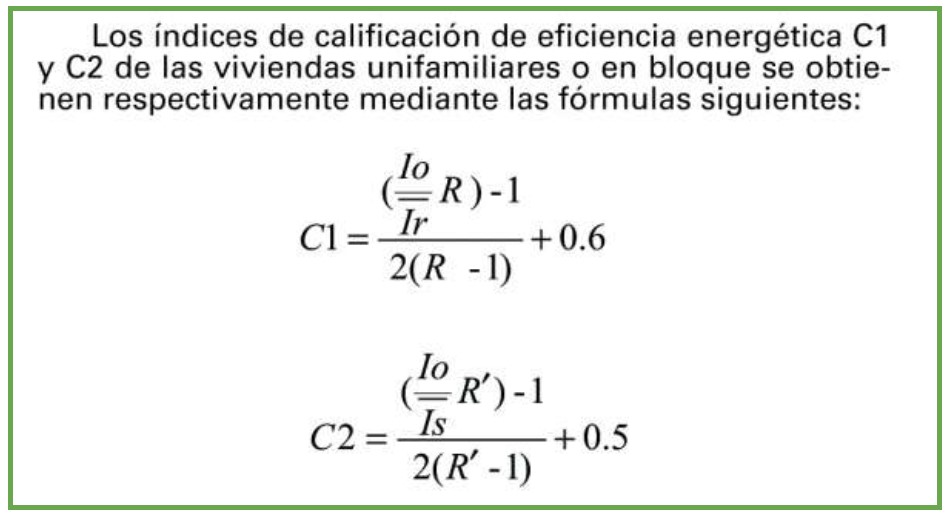
To know the LETTER of qualification, the first thing to do is to calculate an energy efficiency rating index, to do this it is necessary to solve a formula:

Io: It is the value of the analyzed indicator (annual CO2e emissions, annual consumption of non-renewable primary energy, heating demand, etc.) of the building in question.
Ir: It is the average value of the indicator of the benchmark reference stock of new residential buildings (housing).
R: It is the ratio between the value of Ir and the value of the indicator corresponding to the 10% percentile of the reference stock of new residential buildings (housing).
Is: It is the average value of the indicator of the benchmark reference stock of existing residential buildings (housing).
R0: It is the ratio between the value of Is and the value of the indicator corresponding to the 10% percentile of the reference stock of existing residential buildings (housing).
The values of Ir, R, Is, R0 corresponding to the different climatic zones are included in tables published by the Ministry of Development in the document “Calculation of the energy efficiency of buildings” - Annex III.
It should be clear that each LETTER corresponds to an interval of values of the mentioned indices:

-
What is the energy label of the building?
However, all energy efficiency certificates expire 10 years after their issuance. Therefore, if you want to sell or rent a home, you must check that the label is not expired and, if necessary, make all the changes needed to ensure your property has an A classification.
-
What factors influence the energy label of a home?
- Climatic zone. It is necessary to assess where the home is located, its climate, or its altitude, as these are data that cause changes in the energy certificate.
- Surface area of the home. If two properties have identical installations and envelope quality, but their sizes are different, their energy ratings will also differ. In fact, those that are smaller tend to have worse results, since those with more square meters tend to better optimize energy.
- Condition of the envelope. The envelope encompasses all the habitable interior spaces of a home and keeps them separate from spaces like, for example, storage rooms, installations, and the exterior. It is composed of all the enclosures, including the openings for doors and windows. Its analysis largely determines the result of the energy rating.
-
What appears on the energy efficiency certificate?
- Identification of the building or home being certified.
- The procedure used for classification.
- The energy characteristics of the home.
- If applicable, the regulations on energy savings and efficiency that were in force when it was built.
- All tests, inspections, and verifications that the technician has performed.
- The energy classification using the energy label from A to G.
- If any, the recommended measures to improve the rating.


Siber Ventilation
Related posts

Constant flow ventilation systems, how do they work?