Awareness of radon gas following the enactment of regulations
The radon gas is one of the most dangerous poisons that can originate in our homes. Once largely unknown, this gas is generated in the subsoil of many Spanish homes and is almost undetectable, as it cannot be smelled or seen. Nevertheless, it is the second leading cause of lung cancer, according to the World Health Organization. To combat it and expose its severity, there is a radon gas regulation from the European Union, which has arrived somewhat late in Spain. What does it say, and what compliance has it achieved in Spain?
The European Community recommends that new homes have radon levels below 200 becquerels per cubic meter (Bq/m3), with the possibility of doubling that limit for homes already constructed. Therefore, the maximum allowed is 400 Bq/m3 for homes built before the regulation, although it is recommended to reduce the presence of radon gas to a minimum.
The European regulation requires member states to take measures for analysis and actions to reduce concentrations over 300 Bq/m3. In Spain, this community directive came into effect in 2018, much later than in most European nations.
However, is the radon gas regulation currently being applied in our country? Unfortunately, the Technical Building Code still does not include the necessary modifications to force builders to prevent the spread of this poison originating in our homes. It is expected that in 2019, the regulation will be included in the CTE. When the regulation is implemented, all new construction buildings and those that are renovated will have to ensure that the maximum radon gas level is 300 Bq/m3.
In terms of data and as an example, it is estimated that 15.6% of homes built since the approval of the regulations in Galicia -one of the most affected regions- exceeded the maximum acceptable threshold. That will not be the case when the legislation operates within the CTE.
Against this reality, it is necessary in Spain to create true awareness among users and also among the construction sector of the significant damage that radon gas can cause.
The need for radon gas regulation
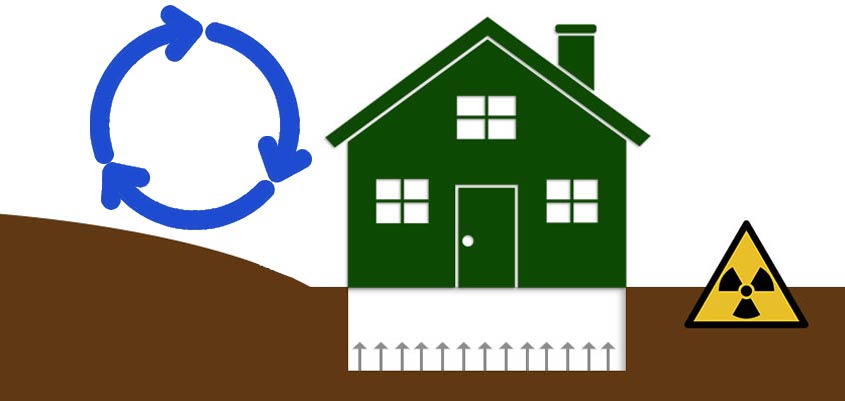
As we mentioned, radon gas is the primary culprit in lung cancer cases, only behind smoking. The risks are greater because, to be detected, it is necessary to install equipment for several days to certify if there is an impact or not. It cannot be measured in a single sample, and it also has no smell or form. It is a colorless, tasteless, and invisible gas. Without the necessary equipment, it is impossible to detect.
This poison originates in the subsoil of many homes, especially in the regions of Galicia, western Asturias, western Castilla y León, Extremadura, and also in northwestern Andalusia. In these locations, it is essential to raise awareness about it, so citizens are advised to inform themselves about it, especially if the homes are in mineral-rich locations.
The half-life of radon is 3.8 days. During this process, alpha radioactive particles are emitted that can enter the body through wounds or through inhalation or ingestion. For this reason, radon in homes can present health risks to large sectors of the population.
The radon gas is a noble gas, so it cannot decompose. To protect ourselves against it and also to reduce its emissions to acceptable levels, it is essential to make efficient improvements in the home. The World Health Organization suggests the following:
- Improve ventilation. Especially in areas of homes that are located underground, as this is where this noble gas tends to originate.
- Install mechanical extraction systems for ventilation in the basement area to draw out radon gas from areas of high concentration and prevent it from spreading to other rooms.
- It is also crucial to seal all leaks. A small crack can be lethal for the entry of gas into the rooms we occupy in the house.
- It is important to seal all walls thoroughly to protect ourselves.

Siber Ventilation
Related posts