Automation in intelligent ventilation systems
Currently, comfort systems tend towards greater automation. Far from cumbersome configurations and also from tedious instruction manuals. However, the trend of home automation is something that has been talked about a lot and now seems less popular. However, this is because automatic mechanisms have settled into everyday life at home. Also with automation in ventilation systems, which offer intelligent air renewal.
In reality, mechanical ventilation is one of the solutions with the greatest automation at home, and perhaps more useful than automatic blinds or lights, which are the most visible face of home automation. Air renewal through mechanical ventilation systems is something that is always in operation. There are no on or off buttons, because the functionality of the system is to be able to provide the necessary air at the required quality at all times.
With mechanical ventilation systems, automation starts directly because they are always in operation and renew the air with the windows closed. They naturally adapt to the rooms, taking into account essential details such as occupancy, temperature, humidity, or the level of air pollution.
Therefore, it is very important that each installation of the different mechanical ventilation systems is carried out taking each project into account in a personalized way. The ventilation flow, the routes of the ducts, or the type of system will always vary depending on the type of construction, the climate of the place, and other conditions. If done correctly, it is possible to automate ventilation and ensure that we do not worry about air quality.
The importance of automation in ventilation systems lies in the fact that, in addition to improving our comfort, the correct renewal of air is a health necessity. In modern buildings, which usually have great thermal insulation, we need this help to guarantee the correct flow of air. This is why the Technical Building Code warns that ventilation is necessary in current buildings.
The first differentiation we find in automation of ventilation is in the size of the system:
- Decentralized ventilation systems. They are the simplest and are usually installed in a dry or humid area to push air or extract it. Each unit is independent, and its automation focuses on knowing the characteristics of the space to ventilate within a certain action radius, to act accordingly.
- Centralized ventilation systems. In this case, the automation is much greater. This is because it will be a complex system, including a control central unit and then a network of ducts through which air will circulate. If it is a dual-flow ventilation system, air will be extracted when it loses quality, and renewed air from the outside will be introduced, in addition to being filtered.
How is automation carried out in ventilation systems?
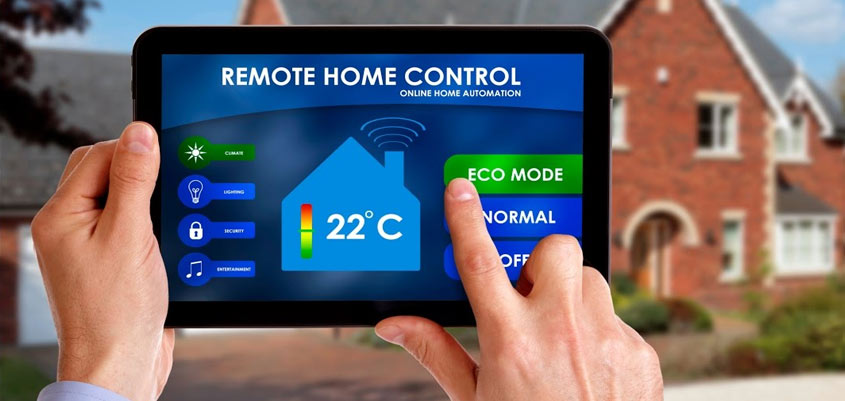
So that the mechanical ventilation system knows how to renew air in a fully automatic manner, it will require a series of home automation mechanisms that provide real-time information about the situation in the rooms:
- Presence detectors. The system will adjust the extraction and admission flow based on the number of people occupying a room.
- Humidity detectors. The relative humidity in the environment is a very important factor to consider, so if the system incorporates this sensor, it will be able to eliminate excess humidity and guarantee better air quality, in addition to optimal temperatures.
- CO2 sensors. CO2 can affect our routine and be harmful to concentration or rest. If an increase is automatically detected, the system can take care of renewing the air accordingly.
- Hourly control. We can adjust the hours when it is most important to ventilate, always in relation to the occupancy of the rooms or the temperatures.
- Temperature controls. If there are increases or decreases in temperature, ventilation systems can adjust their flow to improve indoor temperatures. This is an important function, which will also be influenced by whether a heat recovery unit is present.

Siber Ventilation
Related posts