Air pollution, how does it affect our country?
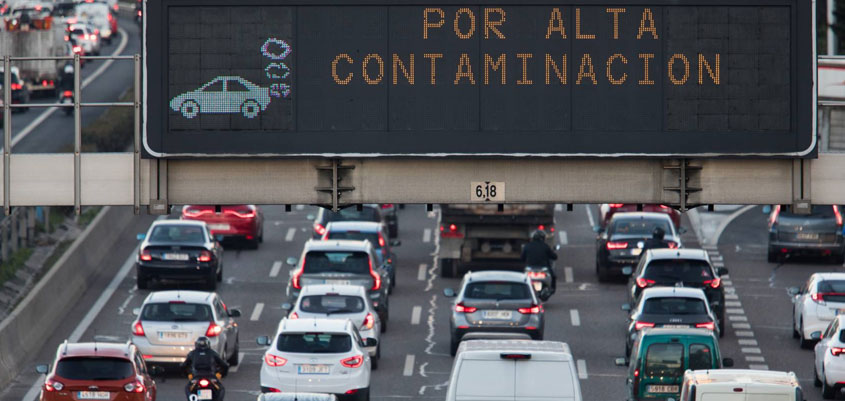
Spain is a country with a lot of sun and wind. In which it is easy to find beautiful blue skies in almost all places. And yet, it is not exempt from air pollution. Of course, at levels far removed from what occurs in developing countries, but some of the large Spanish cities -as in Madrid- may suffer significant pollution problems.
Numbers may seem difficult to calculate, but in the last decade, it is estimated that around 93,000 people died due to air pollution, according to data collected in all provinces by the National School of Health in Madrid. According to Cristina Linares, a biologist in charge at the center, one of the main problems is traffic.
According to the data from the study conducted by the school, all major Spanish cities have at some point breached European regulations regarding air pollution. They explain that nitrogen dioxide, for example, is responsible for 6,085 deaths each year in our country, although they could be avoided. Likewise, Linares states that one of the main problems is the standardization of diesel as fuel in Spain.
Other pollutants in the atmosphere include tropospheric ozone, responsible for half a thousand deaths. This type of ozone is generated at ground level in relation to emissions from vehicles and factories. What problems does this air pollutant bring? Mainly, respiratory problems such as asthma and other lung diseases. And according to the same reports, nearly two thousand deaths were caused in these years by exhaust gases.
In any case, what is really concerning is that every year air pollution increases. According to the World Health Organization, economic recovery has affected the deterioration of the air, leading to a public health problem. Pollution causes premature deaths, hospital admissions, and absences from work. What figures are being used? For example, in 2017, up to 27.9 million tons of fuels were used, a 2.4% increase compared to the previous year, according to data from the Ministry of Energy. The majority of this fuel consumption was for the diesel car market.
Protecting ourselves against air pollution is crucial, as according to the Department of Epidemiology of the National School of Health, "3% of annual mortality in Spain is attributable to air pollution". This is equivalent to about eight times the number of deaths caused by traffic accidents. Furthermore, mortality is only the most visible face of this problem because the most prevalent issues are respiratory problems in many people and lung complications.
Some of the factors causing increases in air pollution are usually related to economic activity. For example, tourism generates more pollution due to increased flights, from emitted kerosene.
Another significant problem is that Spain used more coal for electricity generation in previous years, with an increase of up to 21% in 2017. Likewise, it needs to be understood that that year -the last with records right now- was very hot and dry, making it unsuitable for renewable energies.
How to alleviate air pollution?

Reducing air pollution is primarily in the hands of the civil sector and public administration, but we all have much to say about it. The negative consequences are harmful enough to warrant emergency measures. Although most pollution-related deaths occur in older adults, children can develop asthma and other complications that will affect their lives because of it.
Madrid, in 2016, was the first Spanish city to restrict traffic, but experts warn that this is not enough. Social structures need to be modified. For example, it is more important to strengthen public transportation and multiply parking spaces located on the outskirts to encourage those living far away to use their car up to a metro area.
On a personal level, we have to consider that using private transport is very polluting and it is worthwhile to bet on other alternatives. Carpooling or using a bicycle are two important options, but not the only ones. Likewise, we must consider that reasonable energy consumption is important, both at home and in the workplace.
After all, buildings are the biggest polluters in cities. Even more so than traffic, so reducing energy consumption at home must be a priority in our country. Therefore, legislation related to Nearly Zero Consumption Buildings will come into force starting in 2020, which proposes much more airtight houses, with mechanical ventilation systems that avoid the use of traditional air conditioning systems, the major pollutants indoors.

Siber Ventilation
Related posts
Air Purifiers: Functioning and Possibilities in Our Home
Bathroom fan to renew the air in humid rooms