5 sources of renewable energy to apply in our homes
Beyond international commitments and the intentions of various governments in environmental policy, the transition to renewable and clean energy sources is already a fact. Good news for the planet and for future generations, who have wind or solar energy as great allies.
Renewable energies are not a future project, but an undeniable reality for the fortune of the planet. Unlike traditional energies that emit polluting gases as well as radioactive waste—harmful to both health and the environment—renewable energies constitute the cleanest and most environmentally friendly alternative for obtaining energy.
The main virtue of renewable energies lies precisely in that it puts the pedal to the metal in the fight against greenhouse gas emissions, especially carbon dioxide. However, there are many and significant reasons to make a definitive bet on them:
- They are clean. They produce clean energy without emitting greenhouse gases, making them an indispensable ally in the fight against climate change
- They are inexhaustible. They are energy sources that are permanently available either because the energy of the resource in question is immense (sun) or because it can replenish itself naturally (biomass).
- They are safe and healthy. Air and water pollution has a very negative impact on health. In the case of renewable energies, this pollution simply does not occur.
- They prevent geopolitical conflicts. One of the main sources of dispute between countries revolves around the control and ownership of raw materials. However, renewables are distributed resources, which eliminates that problem. In contrast, renewables are a distributed resource, which avoids those issues.
- They are a plus for rural areas. Those more isolated localities are those that can benefit the most from the implementation of renewable energies, on the one hand, because they help to develop their nature and, therefore, activate employment and the economy in these rural areas. And on the other, because they allow extending the electrical network to places where traditional methods cannot reach.
What sources of renewable energy can we use in our homes?
Due to their implementation and the advantages they generate, we highlight the five renewable energy sources that we should know and take advantage of in our homes.
Wind energy
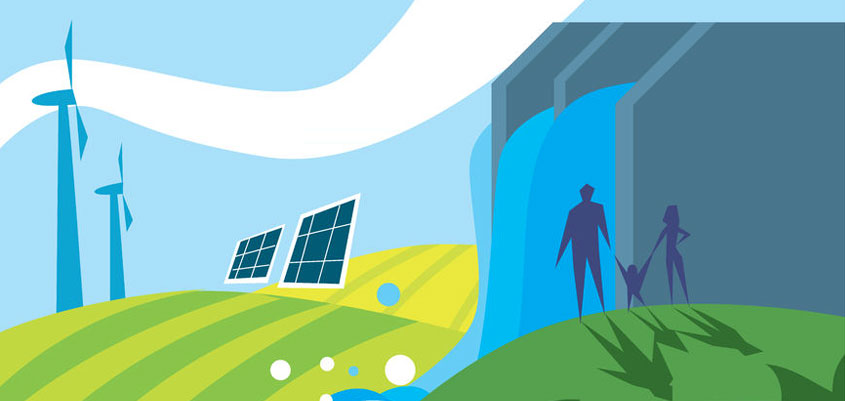
It is the renewable energy that uses the power of the wind to generate electricity. That is, it consists of converting the energy produced by the movement of the blades of a wind turbine driven by the wind into electrical energy.It ranks first among sources of electrical energy in the world and, probably, also in profitability. Countries like Denmark or the United States have been researching it for more than four decades, and according to estimates by the European Environment Agency, its potential could suffice to supply all of Europe.
Photovoltaic solar energy
This is the renewable energy obtained from harnessing the electromagnetic radiation from the sun. Therefore, an energy that could have a lot of potential in Spain.The photovoltaic modules of a solar power plant are composed of individual cells, arranged in chains of several dozen meters in length, which can be oriented towards the sun, remain fixed, or rotate to find the best inclination in relation to the star.
Geothermal energy
It is obtained by harnessing the natural heat from the inside of the earth. This is why it is said to be a resource that can be exploited inexhaustibly and without environmental impact. In regions endowed with volcanic phenomena, it is also possible to exploit that heat to obtain renewable and clean energy.Hydraulic energy or hydro energy
It is the renewable energy that takes advantage of the fall of water from a certain height to generate electrical energy. That is to say, it is obtained from the course of rivers and lakes through the creation of dams and channels.It takes advantage of the transformation of gravitational potential energy into kinetic energy to overcome a difference in level, which is transformed, thanks to an alternator coupled to a turbine, into electrical energy.
Bioenergy
Also known as biomass, its most well-known forms are biofuels, biodiesel, bioethanol, and biogas. It is the energy obtained from the use of organic and industrial matter formed in some mechanical or biological process. Generally, from the substances that make up living beings or their remains and waste.This energy has been in operation for more than three decades in Austria, one of the countries most committed to renewable energies, with an efficiency of 90%.
Incorporating renewables into everyday life
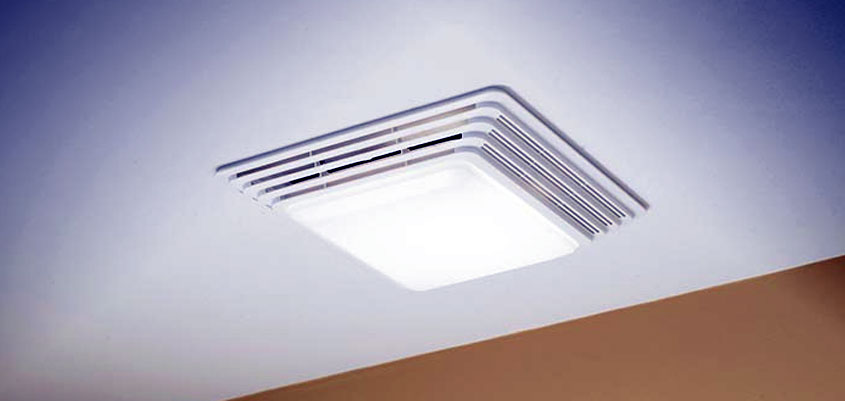
If you've decided to take a step to stop climate change and seek to incorporate small actions into your daily life that have a very positive impact on the environment and future generations, you can do so based on the potential of renewable energy sources.At home, reducing energy consumption involves double flow ventilation systems, which are capable of ensuring air quality in all seasons of the year. What this system does is extract the stale air from the most humid rooms in the homes (kitchen, bathroom, laundry, etc.), convert it into new filtered air, and bring it to the drier rooms, such as the living room, dining room, or bedrooms.
Not only that. The double flow ventilation system keeps the house at a good temperature year-round. In winter, when it is 5°C outside and 20°C inside, the new air enters at 19°C. And in the hottest seasons, when temperatures reach 30°C outside and 21°C inside, the propelled air comes in at 22°C. It is undoubtedly the great ally of renewable energy sources.


Siber Ventilation
Related posts

Constant flow ventilation systems, how do they work?