Campana extractora, ¿cómo elegir la que necesita tu cocina?
El exceso de humo, los malos olores y también la grasa que llega al aire en suspensión son problemas habituales en la cocina. Sobre todo cuando estamos elaborando alimentos calientes sobre nuestros fogones. Para ello, existe la campana extractora, un electrodoméstico que hoy en día ya es esencial en cualquier hogar. Se trata de la manera más sencilla y eficiente de eliminar estos efectos secundarios no deseados a la hora de preparar nuestros platos favoritos.
Sin embargo, no toda campana extractora es igual, y para elegir la que más nos interesa y que además mejor se adapte a nuestras necesidades hay que valorar cómo es cada una de ellas. Y, primero, las condiciones del lugar donde se instalará. ¿Se trata de una cocina cerrada o da al exterior? ¿Los fogones son dos fuegos eléctricos junto a la pared o un hornillo de gas en mitad de un recinto cerca de una ventana que da a la calle? Todo ello influirá en el tipo de campana que necesitaremos.
Primero de todo, hay diferentes diseños de campanas extractoras de cocina:
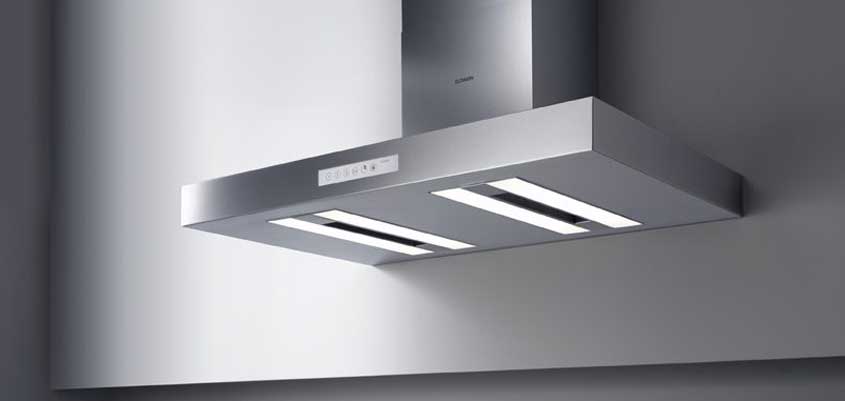
- Campanas extractoras de pared. Son las principales, ya estén en horizontal o inclinadas hacia la zona de cocinado. Suelen ser atractivas para lucir bien en la cocina.
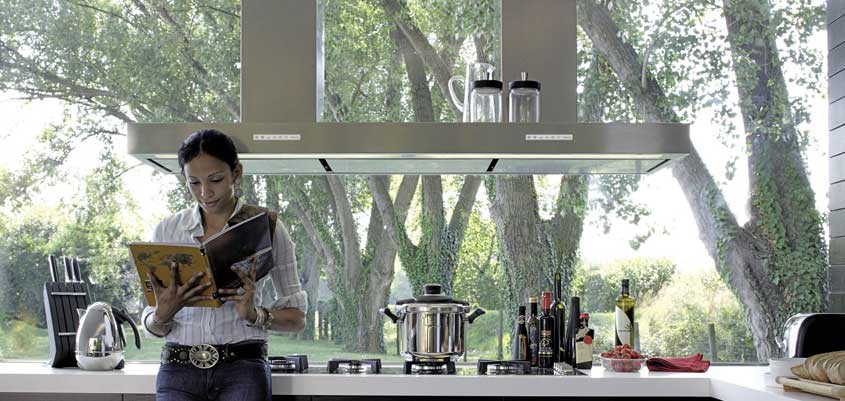
- Campanas extractoras en isla. Están diseñadas para las cocinas que se encuentran en un lugar sin paredes. Muy habituales en cocinas grandes de amantes de la gastronomía o incluso en lugares de enseñanza culinaria. Se sujetan al techo y cuentan con materiales inoxidables para ser agradables a la vista.
- Campanas extractoras ultraplanas. Están enclaustradas en la pared o en un mueble, pueden ser incluso extraíbles. Es posible guardarlas y el espacio que necesitan es menor. Son sin duda las más estéticas.
Tipos de campana extractora
Hemos de tener en cuenta los tipos de extracción que puede tener una campana extractora en nuestras cocinas. Podemos encontrar dos sistemas mayoritarios en relación a lo que se realiza con el humo y el resto de impurezas:
- Campanas succionadoras: Es el sistema de extracción más común. También lo incorporan la mayoría de campanas para eliminar humos y otras materias no deseadas en la cocina. En este caso, el motor hace de aspirador sobre el aire que se genera al cocinar, que atravesará dentro de la campana a través de un filtro que eliminará la grasa. Dicho aire y los humos que contenga se enviarán fuera del hogar. Lo ideal es que el recorrido que tenga que hacer el aire sea el mínimo, ya que así el motor sufrirá menos y será más efectivo. El propio sistema incorpora un mecanismo para que el humo no regrese. Se considera que este tipo de campana extractora es el más eficaz, ya que elimina por completo el humo y el resto de materias no deseadas.
- Campanas recirculadoras: También extraen el aire generado en nuestra cocina y se coloca igualmente sobre los fogones, pero en este caso no existe una salida al exterior para el aire. Así que lo que la campana realiza es un filtrado primero contra la grasa y luego para eliminar los olores y otros residuos. Ese mismo aire, tras haberse limpiado, se enviará de vuelta a la cocina.
- Tamaño. Las campanas extractoras han de contar con, al menos, el mismo tamaño que los fogones sobre los que se colocará encima. Siempre será más efectiva, obviamente, si tiene un espacio de extracción mayor.
- Motor. La campana ha de tener sus motores blindados en hierro para que no se pegue la grasa. Al menos, es interesante que tenga al menos dos velocidades, si bien es habitual encontrar tres niveles de potencia o incluso más.
- Ruido. Históricamente, las campanas extractoras siempre han sido bastante ruidosas. Aun así, en los últimos años esto ha cambiado bastante y el ruido suele absorberse mejor. A pleno motor, una campana extractora de cocina suele generar unos 80 decibelios, lo que ya puede ser ruidoso. Si resulta molesto, lo mejor es hacerse con una que no supere los 50-60 decibelios.
- Extracción. Como hemos dicho, cuantos menos tubos tenga la campana extractora mucho mejor para que elimine los humos. Si el motor no es muy potente, trata que el recorrido del humo hasta llegar al exterior sea el mínimo posible.

Siber Ventilación
Entradas relacionadas

Sistemas de ventilación con caudal constante, ¿cómo funcionan?