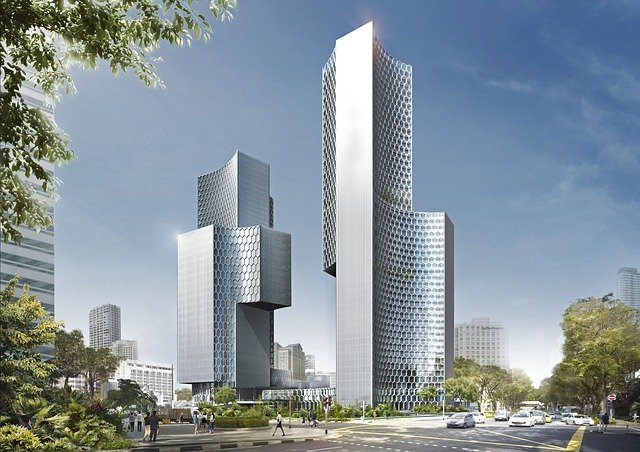
Efficient architecture to reduce pollution in cities
A large part of the CO2 emissions that end up in the atmosphere are generated by the construction sector. Thus, new architectural projects are emerging strongly, developing a type of efficient architecture that neutralizes or reduces its concentration.
Architecture and environmental sustainability are two concepts united in favor of satisfying common welfare. The building of tomorrow must be based on a carefully designed structure that limits the impact of facilities, minimizes energy consumption, reduces costs, and decreases the development of waste and pollution.
Ecological buildings, a rising trend
It is a reality, ecological buildings are in fashion and there is nothing to suggest that it is a passing trend. They are based on the search for architectural solutions to reduce energy consumption through the use of daytime heat and natural lighting, and the use of alternative energy systems.Even from their construction, ecological reinforcement is sought through the use of recycled or non-polluting materials that generate less waste and dust. The most important aspect of a smart building is to have sufficient resources that entail minimal energy and natural resource expenditure.
Now, for the building to be as ecological as possible, it is necessary to implement smart measures such as efficient ventilation systems, improving thermal insulation in walls and roofs, and enhancing the sealing of doors and windows.
Climate control in environmentally responsible homes
Among the main expenses generated in a home is climate control. In this sense, the home automation system appears as an efficient way to avoid overspending while promoting a more responsible ecological home.To this automation in terms of energy management, comfort, and safety, we could add water recycling and saving systems so that the home gains self-sufficiency. In the case of the bathroom, filtering and reusing shower water, and regarding floors and walls, the use of natural and ecological materials.
Compact and renewed cities
It is a specific action, perfectly feasible, that would mean an improvement in current and future quality of life. It would be advisable to curb intensive new construction policies, at least regarding speculative demand, addressing only the real one.The focus would be on rehabilitating existing buildings, thus maintaining the natural process of soil and vegetation, as well as the porous aquifers of groundwater, and enhancing greater urban mobility to gain economic efficiency and improve air quality.
Compensation and absorption of CO2
Construction of buildings produces tons of CO2 and the best way to balance the scales would be through the development of compensation programs. The materials used in construction must be low-impact and certified to guarantee the absence of polluting or toxic substances.On the other hand, plant biodiversity projects have the capacity to absorb CO2 from the environment, thanks to the plant species that are used as cladding on facades and roofs. Thus, these sustainable compositions provide the building with a beautiful horizontal aesthetic, while improving its energy capacity and air quality.

Siber Ventilation