Dehumidifiers and Other Systems to Improve the Health of Our Buildings
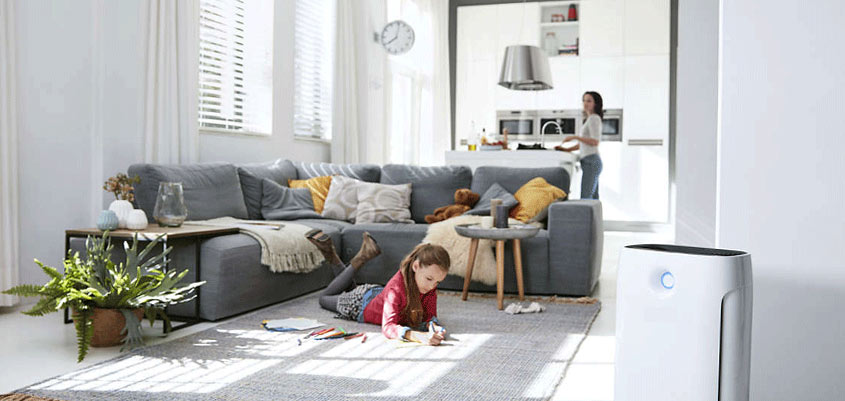
When an indoor space contains too much humidity, it ceases to be a comfortable place whether it belongs to a workplace or a home. Dehumidifiers serve as one of the best systems for removing that excess moisture. With them, the moisture content can be regulated so that it does not exceed 60% , which is the limit above which the environment is considered unhealthy since microorganisms may appear in the environment, and as a consequence, infections may be contracted.
How do Dehumidifiers Work?
These machines that remove humidity can be of different types depending on their operation:
- Refrigerants. Through a fan, these devices draw air into their interior, where it is filtered and taken to an evaporator that is at a very low temperature due to the presence of a refrigerant gas. As the air passes through this evaporator, the water present in the air reaches its dew point, condensing and separating from it. This extracted water is sometimes stored in an internal reservoir or eliminated through a drain connected to the sewage system. The cycle ends when the air passes through a condenser where it is heated to regain its initial temperature and expelled back outside.
- Desiccants. These machines remove humidity without using compressors or refrigerants. For this, the aspirated air is directed to a condenser that has a rotor impregnated with a highly hygroscopic material called desiccant. A silica gel is commonly used, which absorbs water. This system is especially recommended for reducing humidity in very cold environments. It achieves a reduction of the relative humidity level below 35%, making it particularly suitable for industrial installations that require very dry environments.
Controlled Mechanical Ventilation
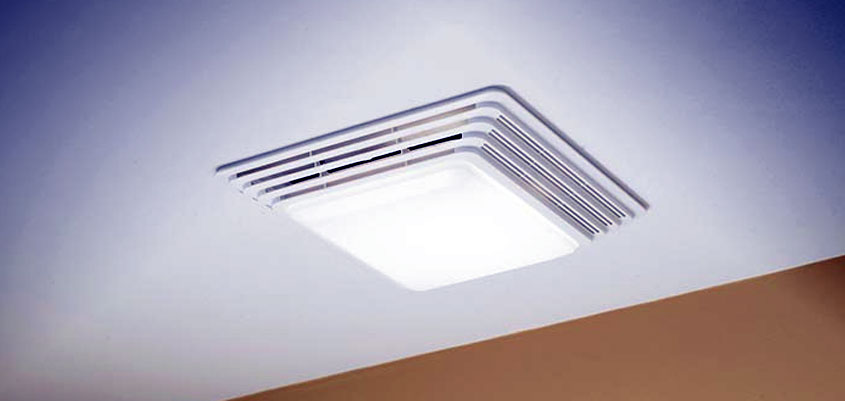
Another system, different from dehumidifiers, for reducing indoor humidity in a home involves using a mechanical ventilation achieved through equipment that facilitates the admission of air by mechanical means and extraction, which can be of self-regulating single flow, hygro-regulating single flow, or double flow. This type of installation allows for the possibility of continuously controlling the intake and expulsion flows of air through a program set by the user without needing their intervention, enabling a constant ventilation and saving on climate control consumption. By constantly renewing the air, it is important that the installation incorporates air filters at the intake to prevent the entry of external pollutants into the home. This type of ventilation is known as Controlled Mechanical Ventilation (VMC) and can be of self-regulating single flow, hygros-regulating single flow, or double flow.
The difference between the two types of controlled mechanical ventilation of single flow is based on the system used to automatically modify the passage area at the inlets and outlets of the air. In self-regulating systems, this regulation is done based on the pressure to which it is subjected, while in hygro-regulating systems it is based on the humidity inside the home.
On the other hand, controlled mechanical ventilation of double flow is generally centralized in a unit that includes a heat recovery system that improves comfort and energy savings by exchanging energy between the conditioned interior air that is extracted and the unconditioned air introduced inside. The heat recovery unit ensures that this type of ventilation is the most efficient as it allows for significant savings in energy consumption, while also ensuring appropriate humidity and temperature levels. Double flow controlled mechanical ventilation requires the highest economic investment but provides the greatest energy savings and comfort in terms of air quality and sound insulation.
The essential components of a double flow controlled mechanical ventilation (VMC) installation are: the heat recovery unit, the distribution box, the supply ducts in dry spaces, and the extraction ducts in humid spaces. It is necessary to achieve a balance between the volume of air supplied and the volume of air extracted to ensure the system's good performance.
The distribution of the ducts in a double flow controlled mechanical ventilation system can be linear or in star configuration. Generally, linear distribution is performed with galvanized steel or thermoplastics. It has the advantage of using less material for its installation, but it may produce higher noise levels between the different rooms of the house. To avoid this, acoustic insulation is required in the ducts. In star distribution, independent ducts are used between the distribution box and each room in the home, which leads to higher material consumption. In this case, the ducts are often made of high-density polyethylene. They often have a constant cross-section, as this prevents any acoustic transmission between the different rooms of the home.
In the double flow system, individual units can also be used for air intake and extraction. The installation is simpler as it avoids duct installation, but it is necessary to create openings in the facade, with the consequent visual impact this may produce on the exterior appearance of the building.
Double flow ventilation systems are essential when constructing passive buildings or buildings where a high degree of energy savings is sought. In this regard, it should be noted that the European Directive 2010/31/EU will promote that starting from December 31, 2018, all new buildings that are occupied or owned by public administration must be Nearly Zero Energy Buildings (NZEB), and from December 31, 2020, for all other new privately owned buildings. Therefore, this regulation will affect not only new buildings but also those undergoing major renovations.


Siber Ventilation
Related posts