
Aerosoles, ¿cómo ventilar espacios cerrados?
¿Te sientes seguro en tu hogar, en tu trabajo o en tu centro de estudios? En este caso, no nos referimos a ningún asunto que guarde relación con temas delictivos, sino que estamos hablando de tu propia salud.
Con la irrupción del coronavirus, es más importante que nunca que el aire que nos rodea se encuentre limpio, sobre todo, para no dejar ningún tipo de margen de actuación al contagio por aerosoles.
Por ello, en las siguientes líneas te mostramos toda la información necesaria acerca de cómo ventilar espacios cerrados.
¿Qué elementos hay que tener en cuenta a la hora de ventilar espacios cerrados?
El objetivo de la ventilación de un espacio cerrado es sanear el aire y tiene tres características destacadas:- Tasa de ventilación. Se refiere tanto a la cantidad como a la calidad del aire exterior que entra en un determinado espacio.
- Dirección del flujo del aire. El aire debe moverse desde la zona más limpia hasta la menos limpia.
- Distribución del aire. Debe ser homogénea, por todas las zonas posibles, con el objetivo de deshacerse de la mayor cantidad posible de aire contaminado.

¿Cuándo es el mejor momento para ventilar?
En el caso de las viviendas, lo ideal es ventilar por las mañanas. Se recomienda que la ventilación dure unos diez minutos y se efectúe a diario.En el caso de los espacios cerrados destinados al trabajo o al estudio, lo más aconsejable es ventilar también cada mañana, coincidiendo con la entrada, y varias veces al día. Si es posible, una vez cada hora y con las ventajas completamente abiertas.
¿Qué formas de ventilar existen?
Es posible que cuando piensas en ventilar una estancia, te centres tan solo en la acción de abrir las ventanas. Sin embargo, esta es tan solo una de las alternativas disponibles.Por ello, toma nota de los siguientes tipos de ventilación:
- Ventilación natural. Es un sistema muy sencillo. Como ya hemos comentado, consiste en abrir las ventanas o las puertas con el fin de que entre la mayor cantidad de aire posible del exterior. Lo más adecuado es abrir varias puertas o ventanas al mismo tiempo para que se forme una corriente de aire.
- Mediante sistemas de ventilación mecánica. Son aquellos en los que el movimiento del aire, introducido y expulsado de una estancia cerrada, se provoca por la intervención de un ventilador alimentado, generalmente, con energía eléctrica.
¿Qué errores no debes cometer a pesar de ventilar espacios cerrados?
Además de saber cómo ventilar espacios cerrados, es importante que analices algunas acciones concretas en las que no debes caer. Son los siguientes:- Evita fumar dentro de la vivienda.
- No utilices velas o incienso con demasiada frecuencia.
- Es mejor utilizar una bayeta húmeda para limpiar el polvo que un plumero.
- Procura que los niveles de humedad de la vivienda sean los adecuados.

Sistemas de ventilación para aerosoles
Por otro lado, una de las grandes preocupaciones desde que empezó la pandemia es que los espacios cerrados sean lugares seguros y no un foco de transmisión del coronavirus.No es una labor sencilla, ni mucho menos, pero sí esencial. Es necesario no solo en los hogares, sino también en los centros de trabajo o estudios.
Por ello, una de las formas más eficaces de luchar contra este problema es disponer de sistemas de ventilación para aerosoles. Ten en cuenta que estas partículas se desplazan, al menos, entre 1 y 2 metros, pero en algunos casos pueden alcanzar distancias de hasta 8 metros.
Como la distancia de seguridad y el uso de la mascarilla pueden no llegar a ser suficientes, presta atención a todo lo que te mostramos también en las siguientes líneas.
¿Por qué se necesitan sistemas de ventilación para aerosoles?
Como ya hemos desarrollado anteriormente, y recapitulando, por definición, los aerosoles son unas diminutas partículas que se vierten al aire al respirar, hablar, toser o estornudar.Hay que tener en cuenta que pueden flotar en el aire y llegar directamente a otras personas. Por tanto, un sistema de ventilación mecánica optimizado puede convertirse en un buen aliado a la hora de reducir el riesgo de contraer la enfermedad.
También es necesario valorar que las partículas de menor tamaño, como los aerosoles, son capaces de permanecer en el aire por más tiempo y quedarse adheridos en partículas en suspensión como el polvo. Además, consiguen atravesar las barreras de protección de las fosas nasales y de la boca.
No olvides que los aerosoles se pueden extender rápidamente por un espacio cerrado. Por eso, si una persona portadora de COVID-19 está presente, las posibilidades de transmisión son muy altas.
¿Qué sistemas de ventilación para aerosoles resultan eficaces?
Somos conscientes de lo importante que resulta encontrar soluciones para reducir el riesgo de contagio que ocasionan los aerosoles. Además, sabemos que no siempre es sencillo conseguir que los espacios cerrados cuenten con una adecuada ventilación.En este sentido, los purificadores de aire con filtro también se posicionan como una buena alternativa. No solo son capaces de contener la propagación de virus, sino que también evitan la formación de moho y la dispersión de bacterias que pueden ocasionar graves problemas de salud.
Por supuesto, a la hora de adquirir un sistema de ventilación, es esencial el hecho de confiar en fabricantes que ofrezcan todas las garantías, elaborando un correcto diseño y dimensionado, garantizando así una óptima calidad del aire interior.

Siber Ventilación
Entradas relacionadas

¿Por qué es necesaria la ventilación mecánica en las viviendas?
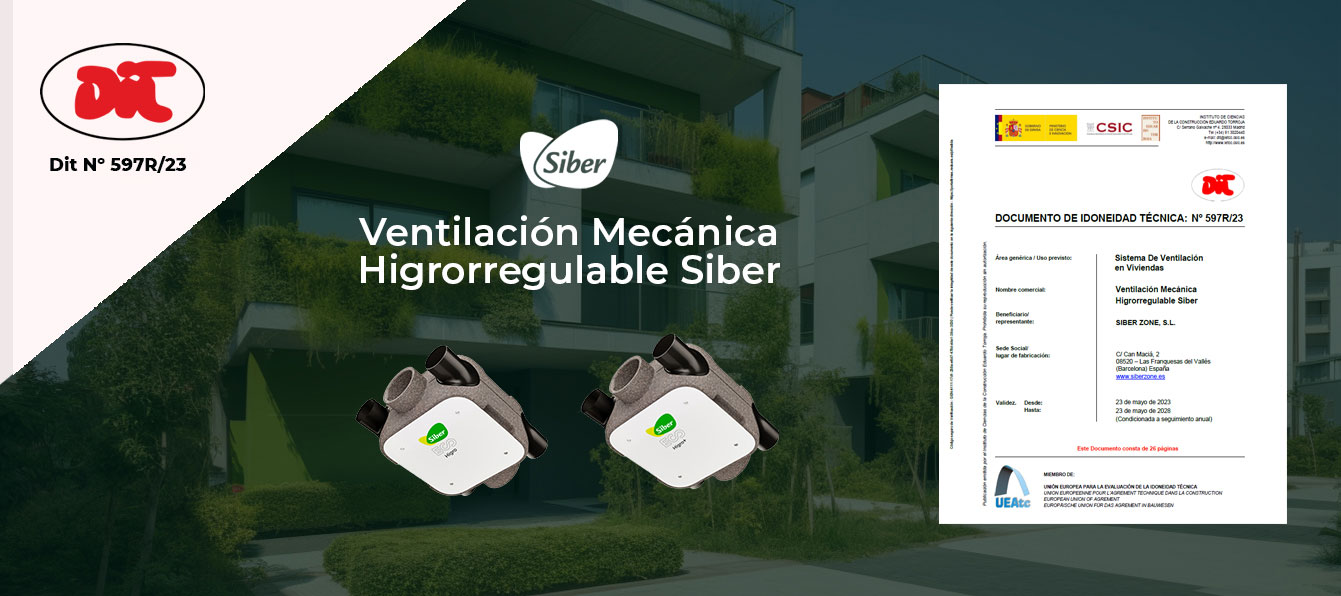
Documento de Idoneidad Técnica (DIT) en ventilación: qué es y por qué el DIT 597R/23 de Siber marca la diferencia