Beneficios del recuperador entálpico y sus usos principales
El intercambio de calor o de aquellos factores que afectan a las temperaturas es una de las principales funcionalidades de los sistemas de ventilación mecánicos basados en la eficiencia energética. Su funcionamiento es sencillo: trata de atemperar las estancias en verano e invierno para no requerir del uso de los sistemas de climatización tradicionales, ya sea aportando calor o frío o modificando los factores que influyen en cómo sentimos la temperatura.
Y entre los diferentes tipos de intercambio de temperatura podemos encontrar el recuperador entálpico, cuya función principal es la recuperación parcial de la humedad, que puede usarse en hogares, oficinas o lugares comerciales.
La recuperación parcial de humedad permite que en invierno el aire que entre en las estancias tenga unas mejores condiciones de humedad relativa tras su paso por el intercambiador de calor. De esta manera, no resulta necesario tener que aportar una humectación del caudal de impulsión.
En verano, el efecto que se busca con el recuperador entálpico es un cierto "secado" del caudal de aire exterior. Gracias a ello, podemos evitar el gasto energético que supone secarlo, por ejemplo, con el aire acondicionado.
En todos los casos de uso del recuperador entálpico, los consumos son muy moderados en comparación con los sistemas de climatización tradicionales. Es por ello que la instalación de esta solución es algo a tener en cuenta en aquellos lugares donde se requiera modular la humedad. En invierno, además, es capaz de mejorar considerablemente las condiciones de humedad relativa en el interior de las viviendas, por lo que como elemento de confort es muy recomendable. Además, con la recuperación de calor o humedad es posible lograr un grandísimo ahorro en costes energéticos, por lo que se recomienda de cara a los Edificios de Consumo Casi Nulo, cuya obligatoriedad será total a partir de 2020 para todas las construcciones en España.
Ha de tenerse en cuenta que los recuperadores entálpicos solo son capaces de recuperar la humedad existente. Con eso nos referimos a que no será lo mismo su instalación en una oficina que en una vivienda, ya que los centros de trabajo con oficinistas no suelen producir humedad como sí ocurre en un hogar, donde hay estancias húmedas como son el cuarto de baño o la cocina. Para no crear ambientes demasiado secos, es importante tener esto en cuenta a la hora de instalar el recuperador entálpico.
Un recuperador entápico se diferencia de un recuperador de calor convencional en que los normales solo utilizan energía sensible, esa que notamos como frío o calor. Los recuperadores entálpicos, en cambio, utilizan energía latente como es la humedad de una estancia.
¿Cómo funciona el recuperador entálpico?
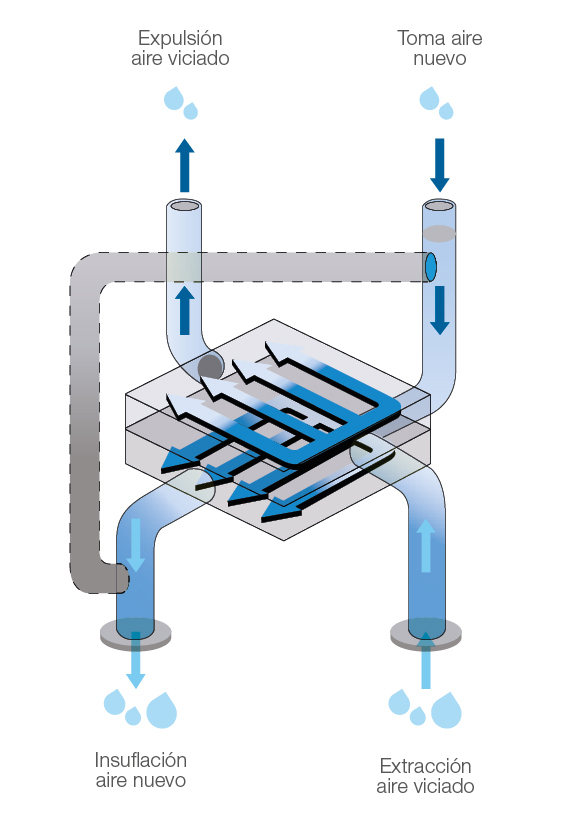
El funcionamiento de los diferentes sistemas de recuperación de calor es bastante sencillo y para ello hace uso de las propiedades psicométricas del interior de una estancia, su temperatura y humedad.La eficiencia de un recuperador entálpico dependerá mayoritariamente de lo siguiente:
- Las condiciones de temperatura y humedad en el interior de la estancia. Si existe una buena estanqueidad, el recuperador obtendrá un aire más atemperado con el que aclimatar el procedente del exterior.
- El uso de las estancias húmedas y secas. Se ha de tener en cuenta si el proyecto donde se instalará el recuperador es un lugar de oficinas o un restaurante, por ejemplo. O el tipo de vivienda de que se trata.
- La temperatura y también la humedad del exterior.
- El caudal que circula por los conductos influirá en las capacidades de climatización del recuperador entálpico.
- El diseño de la instalación también influirá en cuánto calor será capaz de recuperar, con una necesaria equilibración de los caudales de extracción y admisión.
Encontramos varios tipos de recuperadores entálpicos como los siguientes:
- Recuperadores entálpicos con rotores. Puede lograr la recuperación en verano en sitios húmedos como la costa. Recupera la humedad para que no entre en interiores, y en el caso de lugares secos como la meseta en España se evita que en invierno no se escape la humedad. Tiene una gran recuperación energética, sensible de un 70% y entálpica de un 60%. Es resistente a la congelación. Su consumo eléctrico es más caro.
- Recuperadores entálpicos de modo pasivo a través de las paredes de los conductos. Puede lograr la recuperación en lugares húmedos en verano y secos en invierno, como los sistemas de rotores. Incorporan un bypass para evitar la recuperación de humedad en climas húmedos cuando el aire exterior es más seco que el interior. Sin embargo, es más costoso en su instalación y su rendimiento sensible es algo menor.

Siber Ventilación
Entradas relacionadas
¿Por qué es necesaria la ventilación mecánica en las viviendas?
Sistemas de ventilación con caudal constante, ¿cómo funcionan?